
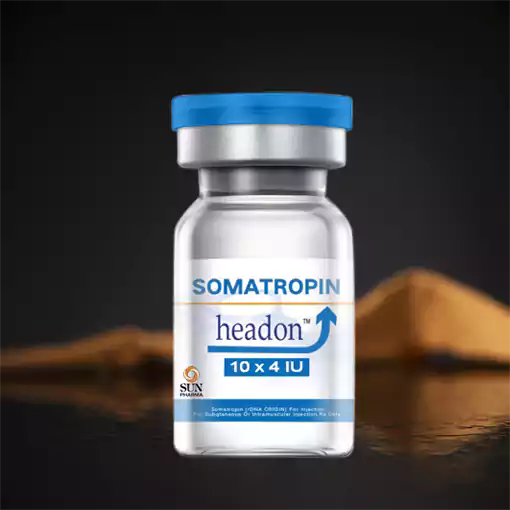
Growth hormone (GH) is a protein hormone made by the pituitary gland at the base of the brain. It drives growth in childhood and helps control body composition, metabolism, bone strength and muscle throughout life.
Before 1985, children with growth hormone deficiency were treated with GH taken from the pituitary glands of deceased donors. That supply was withdrawn after it was linked to cases of Creutzfeldt-Jakob disease, a fatal brain infection. The same year, the first growth hormone made using recombinant DNA technology was approved. Today, all somatropin is made this way, by inserting the human GH gene into bacteria or other cells, which then produce pure hormone. It carries no risk of infection from human tissue.
Somatropin is a peptide hormone, not a steroid. It must be injected, because stomach acid and enzymes would destroy it if swallowed.
|
Property |
Detail |
|
Generic name |
Somatropin (recombinant human growth hormone, rhGH) |
|
Common brand names |
Genotropin, Norditropin, Humatrope, Omnitrope, Nutropin AQ, Saizen, Zomacton, Serostim, Zorbtive |
|
Drug class |
Growth hormone; peptide hormone |
|
Structure |
Single chain of 191 amino acids with two disulfide bridges |
|
Molecular weight |
about 22,000 daltons (22 kDa) |
|
Forms |
Prefilled pens, cartridges, and vials of powder to mix; some needle-free devices |
|
How it's given |
Injection under the skin (subcutaneous); rarely into muscle |
|
Half-life |
A few hours after injection, though its effects through IGF-1 last much longer |
|
Prescription status |
Prescription only, under specialist care |
Newer long-acting growth hormone products are injected once a week instead of daily, such as somapacitan (Sogroya), lonapegsomatropin (Skytrofa) and somatrogon (Ngenla). These are modified forms of growth hormone. They are not the same molecule as somatropin, but they treat similar conditions and may suit people who struggle with daily injections.
Growth hormone works in two ways: directly on tissues, and indirectly by making the liver produce a second hormone called IGF-1 (insulin-like growth factor 1).
In children: growth speed usually increases noticeably in the first year, often doubling in children with true growth hormone deficiency. Over years of treatment, many children reach an adult height close to their genetic target.
In adults with GH deficiency:
Height increase depends on open growth plates. Once these fuse, usually in the late teens, somatropin can no longer increase height. In adults, it is used for its metabolic and body composition effects, not growth.
Because most of growth hormone's effects run through IGF-1, doctors use blood IGF-1 levels to judge whether the dose is right. Too low means the dose may need raising; too high raises the risk of side effects and is avoided.
Approved uses vary by brand and country. The most common are listed below.
|
Condition |
Who it helps |
|
Growth hormone deficiency (GHD) in children |
Children whose pituitary makes too little GH |
|
Turner syndrome |
Girls with this chromosomal condition, who are typically short |
|
Prader-Willi syndrome |
Children with this genetic condition, to improve growth and body composition |
|
Small for gestational age (SGA) |
Children born small who have not caught up in growth by about age 2–4 |
|
Chronic kidney disease |
Children with growth failure due to kidney disease |
|
Noonan syndrome |
Children with short stature from this genetic condition |
|
SHOX deficiency |
Children with short stature due to this gene change |
|
Idiopathic short stature |
Very short children with no identified cause (approved in some countries) |
|
Adult growth hormone deficiency |
Adults with GHD from pituitary disease, surgery, radiation, injury, or continuing from childhood |
|
HIV-associated wasting (Serostim) |
Adults with HIV losing weight and muscle |
|
Short bowel syndrome (Zorbtive) |
Adults needing nutritional support, short term |
Somatropin is for children and adults with a confirmed diagnosis, usually made by a pediatric or adult endocrinologist. Diagnosis often involves:
Somatropin is given as a small injection under the skin, usually once a day, most often in the evening to match the body's natural night-time GH release. Common sites are the thigh, belly, buttock or back of the upper arm. Most families and adult patients learn to inject at home using a pen device after training from a nurse.
Doses are based on body weight (children) or adjusted to IGF-1 levels (adults), and differ slightly between brands. The ranges below come from prescribing information and are shown only to explain medical use; your endocrinologist sets your dose.
|
Patient group |
Typical dose range (prescribing information) |
|
Children with GHD |
About 0.16–0.24 mg per kg per week, divided into 6–7 daily injections |
|
Turner syndrome |
Up to about 0.33–0.37 mg per kg per week, divided into daily injections |
|
SGA, Prader-Willi, other pediatric conditions |
Weight-based doses set by the specialist |
|
Adults with GHD |
Start low, often 0.1–0.3 mg per day (lower in older adults), then adjusted every 1–2 months based on IGF-1 and symptoms |
Women taking oral estrogen often need higher doses, because oral estrogen reduces the liver's response to GH.
Practical tips
Tell your doctor about every health condition and medicine before starting somatropin. Key precautions include:
No FAQs available for this product.